
Charles Mitchell Interview | Friday’s Familiar Discourse & Nanty Narking’s Necessary Nuisances - November 21
Living Historians in Ken Burns’ The American Revolution

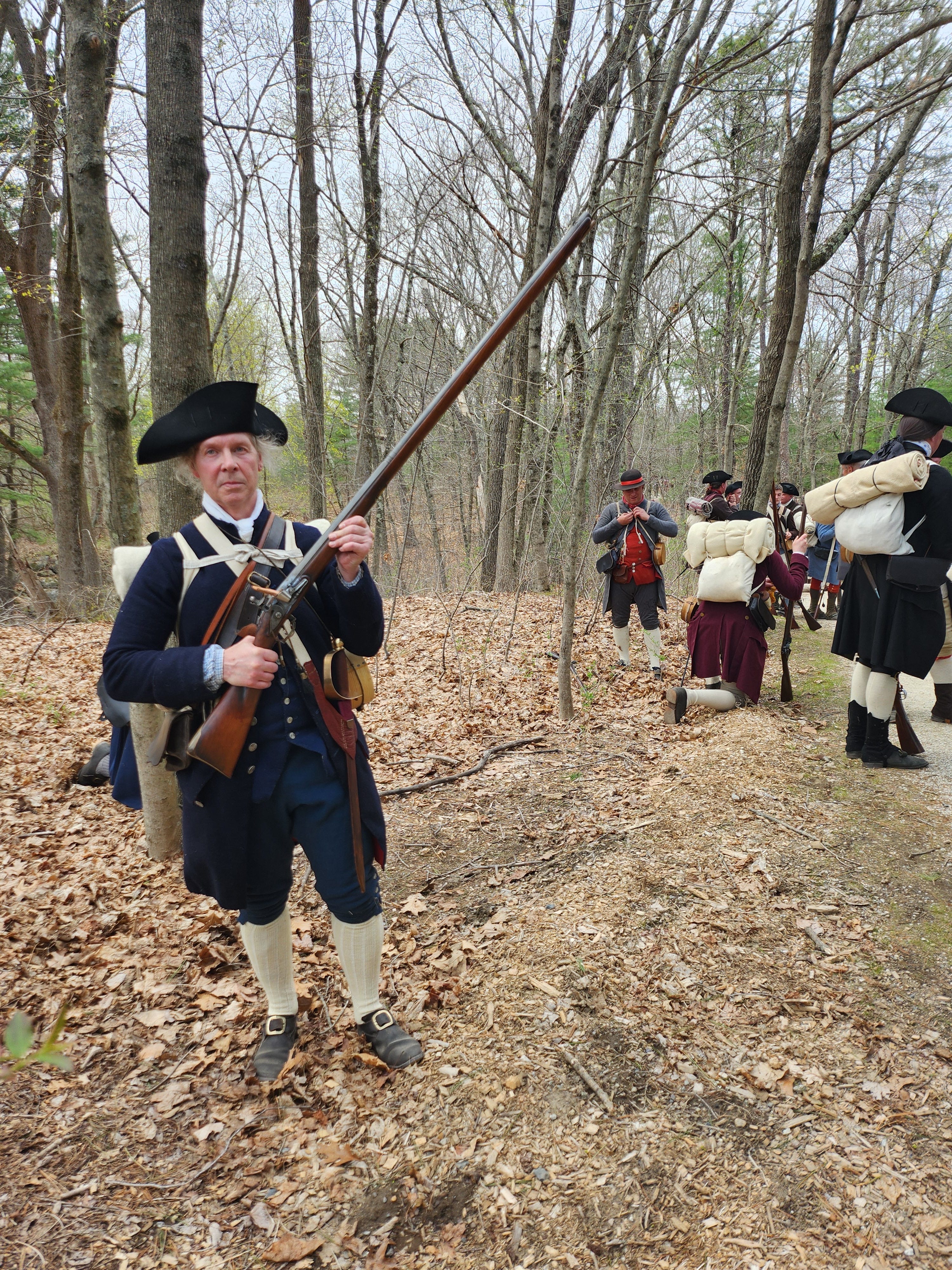
A Conversation Begins
Even before Charles Mitchell steps into a historic kit, he carries the landscape with him. The stretch of country west of Plattsburgh—pine woods giving way to river bends, the long pull of the Adirondack foothills—shaped his sense of the past long before he called himself a living historian. Retirement didn’t slow him; it simply cleared space for the next chapter. After three decades in the classroom, he moved from teaching earth science to mentoring mountain hosts at Whiteface, all while deepening his work in Revolutionary-era interpretation.
What stands out most in conversation is his steadiness. He talks about Fort Ticonderoga the way some speak of sacred ground: a place that demands one’s best, rewards preparation, and surrounds volunteers with people who care deeply about getting the history right. His path from reenactor to living historian wasn’t planned. It grew out of invitations—from his son, from fellow interpreters, from the sites themselves—that opened into a vocation grounded in accuracy, camaraderie, and a kind of quiet service.
That ethos carries into the field. Whether representing Hazen’s 2nd Canadian, handling artillery at Ticonderoga, or tracing family ties through the Sons of the American Revolution, he treats each portrayal as an opportunity to help visitors envision the people who once stood on these landscapes. His work connects modern travelers to the lives that shaped the North Country and the campaigns culminating in the Battles of Saratoga.
The questions that follow offer an inside view of his journey—how he prepares, why he serves, and what he hopes the Semiquincentennial will invite Americans to discover.
The interview with Charles Mitchell
PP: What first drew you toward interpreting the past through living history, and how has that initial spark evolved as you’ve deepened your work on the era of the Revolution?
CM: Growing up in and around Plattsburgh, NY, having an interest in history was seemingly my destiny. As kids, we’d spend time at two particular beaches: one at Valcour (site of the Battle of Valcour, October 11, 1776), and the other on Cumberland Bay. (Battle of Plattsburgh, Sept. 11, 1814) The spark that ignited my passion for being a living historian was when my oldest son attended a history camp with Craig Russell during the summer of 2009. After the last day, he said, “Hey Dad, I was invited to the Battle of Plattsburgh reenactment. You should come too.” Well, that was it. I researched the proper militia outfit, got what I could, and fielded with the local group. June 2010 was the 250th anniversary of the Battle of Point Au Fer. I went out to see the setup on Friday afternoon and ran into Tom Pray. He said, “You ought to join us.” I borrowed a kit and showed up on Saturday. After the battle, I reconnected with Craig Russell and met members of his group. Craig said, “ You should join us at Ticonderoga next weekend.” And so the story goes.
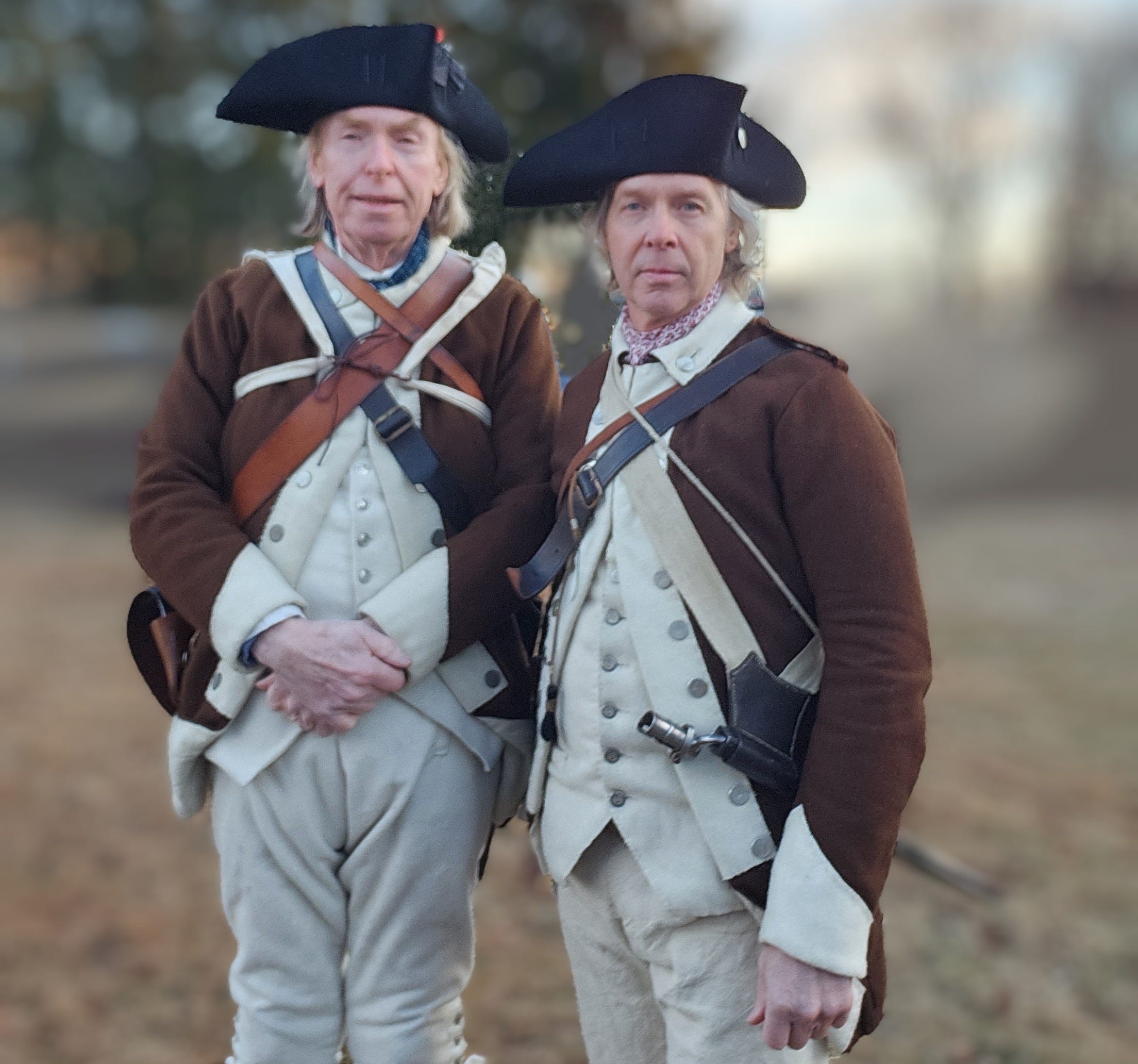
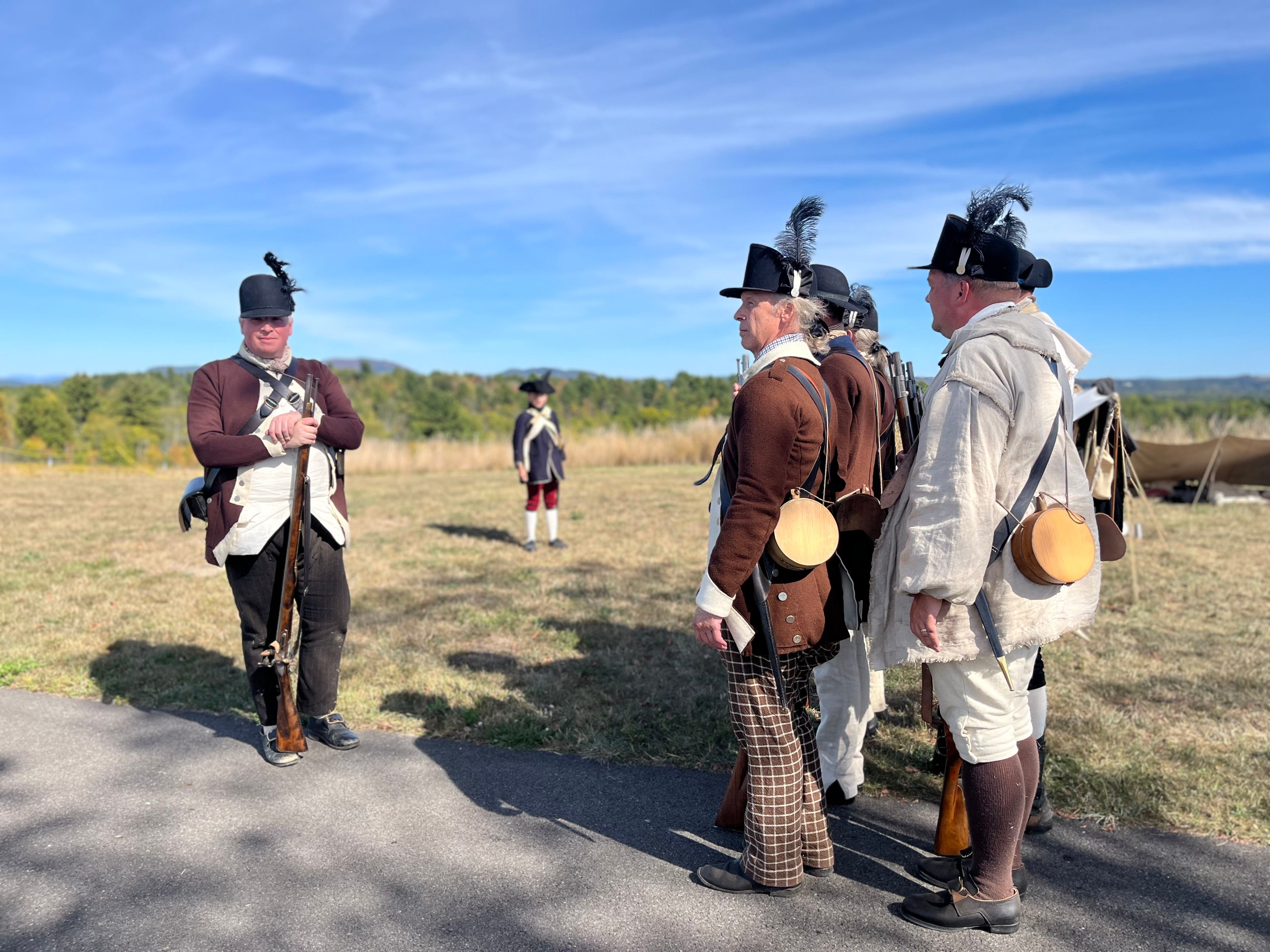
One reenactment led to another across F&I, the War of 1812, and the Civil War. After the commemoration of the 250th, 200th, and 150th Anniversaries of these time periods, our group decided to focus on the Revolution. Our portrayal would be of Moses Hazen’s 2nd Canadian, also known as Congress’s Own. We created brown-faced, white regimental coats and attended the event at Fort St. Jean during the summer of 2016. To improve our knowledge, skills, and impressions, Craig Russell and I began regularly attending workshops at Fort Ticonderoga. While attending one of these, Stuart Lilly (Vice President of Fort Ticonderoga and, overall, a very nice guy) asked if we’d be interested in volunteering. We were. Over time, I’ve deepened my understanding of the Revolution era by discovering that I had relatives who served, and I was able to join the Sons of the American Revolution (SAR). This has strengthened my commitment to authenticity and higher standards. I want people to, as Tommy Tringale (a living historian and event organizer) says, “look at me and think of them.”
PP: Which units do you portray, and what guided those choices? How does each unit’s historical significance shape the stories you feel responsible for bringing forward?
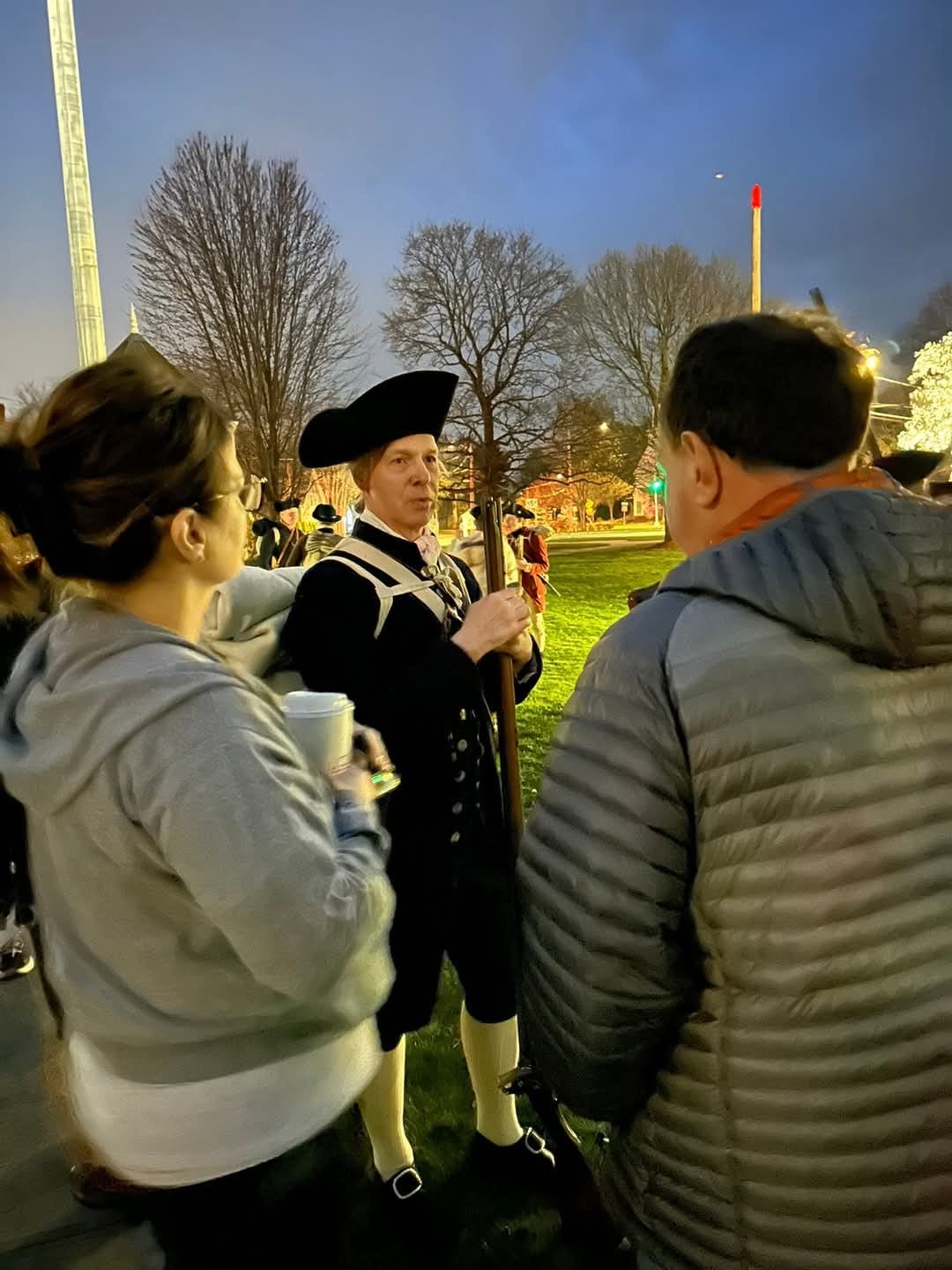
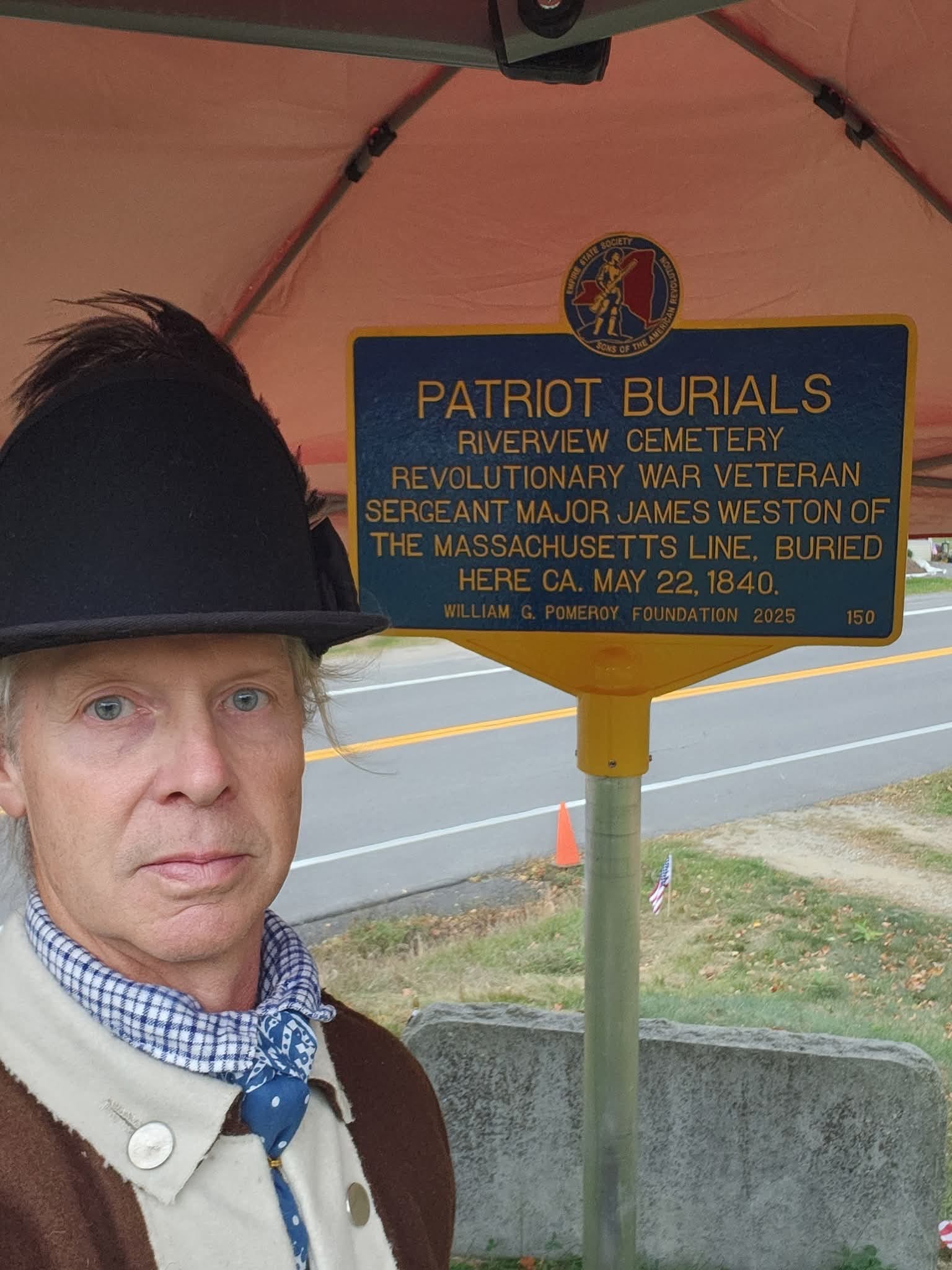
CM: Currently, I portray Hazen’s 2nd Canadian, 3rd Massachusetts, Stevens’ Artillery, and Connecticut militia. Our local unit chose Hazen’s because of our proximity to Plattsburgh, Clinton County, NY, where we live. Hazen initially mustered out of St. Jean, Quebec, which is just north of us. After the war, the refugees from Hazen’s were given land grants in northern Clinton County. Many of Hazen’s veterans were laid to rest in cemeteries throughout the county. Steven’s is Ft Ticonderoga’s 1777 Artillery impression, and I made the kit in a workshop. I met the 3rd Massachusetts group at the Bidwell House in 2023. I really like the people and admire their commitment to higher standards, and I applied for membership. Recently, I attended a Patriot Marker ceremony as a member of the SAR color guard. The patriot had served in the 6th Massachusetts. I wore my 3rd Massachusetts uniform and explained to family members that the 3rd and 6th Massachusetts regiments were part of Nixon’s Brigade at Saratoga. (Look at me, think of them.) The Connecticut militia’s mission is to honor my relatives and keep their stories of serving on the Lexington callout, the Siege of Boston, Valley Forge, and the burning of Fairfield, Connecticut, alive.
PM: You served as a living historian for Ken Burns’ The American Revolution. Could you walk us through that experience—preparing the clothing and gear, adapting to the landscape and conditions on set, and working with the production team to ensure a historically grounded interpretation?
CM: I’ve had the opportunity to work on several movie sets because of my reenacting experience. I am in the Battle of Chrysler’s Farm film, which plays at the Upper Canada Village visitors’ center. I portray an American sergeant in “Shipwrecked on a Great Lake” which is a War of 1812 documentary based on the James Fenimore Cooper book “Life Before the Mast.” I portrayed an American militiaman in “Tell the World.” Recently I was hired as an extra for the filming of a Netflix docu-series entitled “1776- The Experiment.” We filmed last week at Ft. Ticonderoga. This project, like the others I’ve done, involved being on set for multiple days and making multiple changes of clothing, following directions, having speaking parts, and shooting scenes over and over. (“Back to one.”)
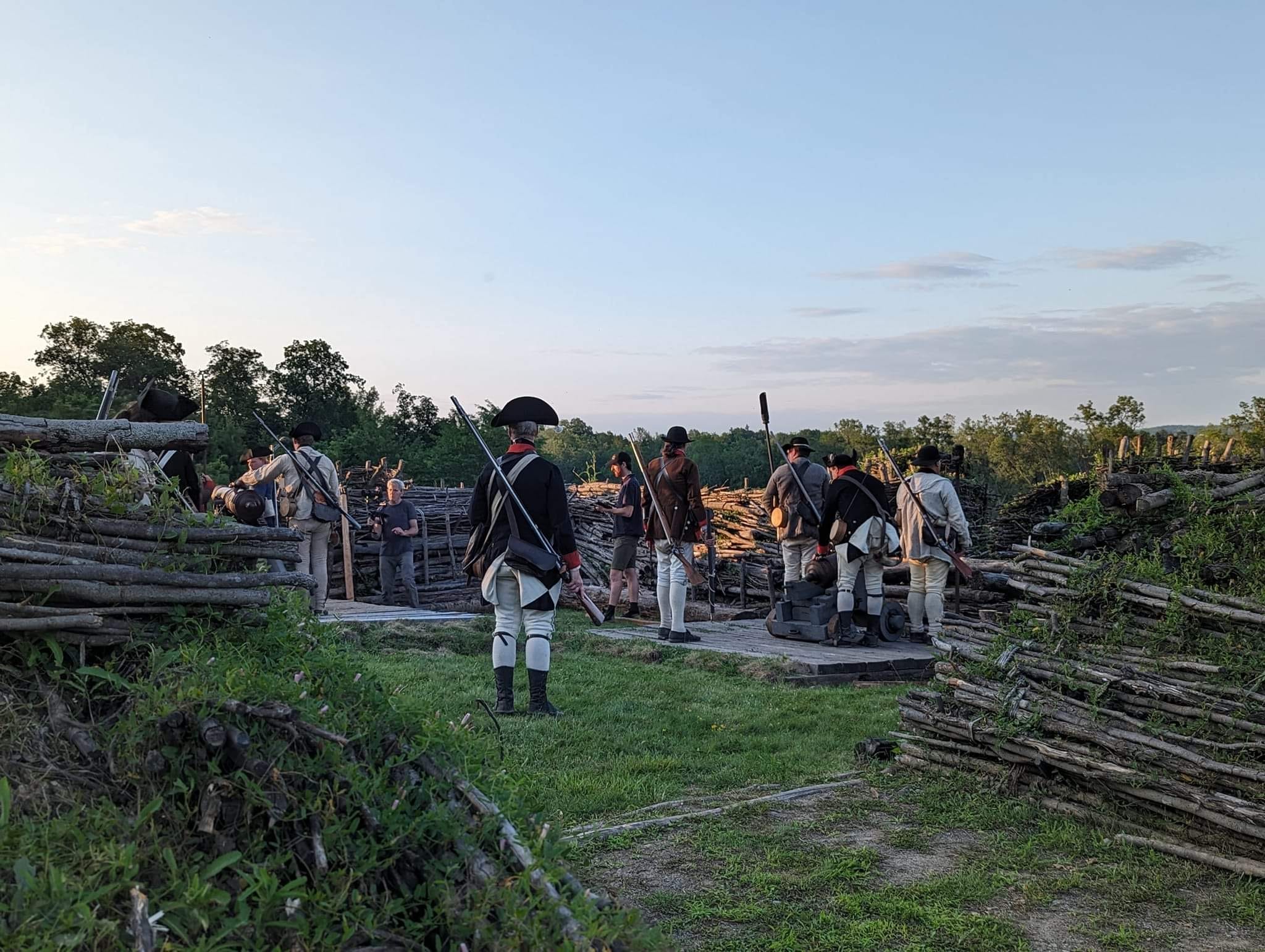
The chance to appear in the Ken Burns documentary was only because I was taking part in the Battle Road reenactment with Farmer’s Company or when I was volunteering at Fort Ticonderoga for the July 4th weekend a couple of years ago. At Ticonderoga, we were in our Steven’s kit and were asked to do some work out at the redoubt in the evening as there was a crew filming for the Burns documentary. All I had to do was wear my Steven’s kit and follow instructions. Pretty much like our regular cannon demonstration. I believe our commitment as reenactors to meet the high standards set by Fort Ticonderoga and Minuteman NHP for the kit and the drill was all we needed to ensure historically grounded interpretation.
PP: As the Semiquincentennial approaches, what do you hope the 250th anniversary will accomplish—both for public understanding of the Revolution and for the living-history community that helps anchor visitors’ experiences at sites tied to the Battles of Saratoga and other pivotal moments?
CM: I’m hoping the 250th will draw attention to the Battle Of Valcour Island, Fort Ticonderoga, Mt. Independence, Hubbardton, Bennington, Mohawk Valley, such as Stone Arabia, Fort Plain, Ft. Klock, Herkimer home, Fort Stanwix, Ft. Ontario, Ft. Niagara and of course, Saratoga. I hope people will visit these places because they have incredible stories to tell. Visit the museums, reenactments, talk with employees, volunteers and reenactors. Discover how the outcome of battles may have influenced political decisions. Saratoga is a prime example of this. Saratoga 250 is doing an excellent job of educating people about the Battle of Saratoga as America’s Turning Point.
As President of the Valcour Battle Chapter, SAR, I’m hoping the 250th will encourage people to research their family tree and see if they have relatives who served and pursue the history found anew. I found that a cousin of my direct relatives moved to Plattsburgh in 1795 and had a land track north of town.
PP: You’ve spent much of your career as an educator. How does that background shape the way you approach interpretation in the field? Where do you see continuities with classroom teaching, and where does living history offer something distinct for audiences, especially those encountering heritage sites for the first time?
CM: I believe my background in teaching helps me to feel comfortable speaking with people. In a similar way to teaching in the classroom I feel that I need to be prepared to present material and be ready to answer questions the public may have. Sometimes I feel like a first year teacher just trying to stay one chapter ahead. Whether it’s while volunteering at Ft. Ticonderoga or attending a reenactment, there are always going to be teachable moments. The geographic locations, geology, modes of transportation, uniforms, food, tools, skills, weapons etc. I really enjoy the research and the opportunity to share. I was an earth science teacher so I find talking about the geology of the Champlain Valley and the use of the waterways as the highways enjoyable. During the summer I assist Craig Russell with the local history camp which allows me to use my skills I learned as an educator. Teaching about our local history, having the kids engaged in setting up camp, cooking, drilling and learning other skills such as cartridge making and sewing a leather wallet lets them experience what it’s like to be a living historian. Many can’t wait to come back.
Why It Matters
Living history sits at the crossroads of memory and place. Done well, it gives visitors a way to stand inside the story—feeling the terrain, hearing period commands, watching skilled interpreters bring documented practices to life. Mitchell’s work reminds us that these aren’t pageants; they’re forms of public scholarship grounded in archival research, material culture, and site-specific interpretation.
His experiences also reflect something essential about the northern corridor from Valcour Island to Saratoga. The region shaped the course of the Revolution, and it still holds a concentration of preserved landscapes—Crown Point, Ticonderoga, Mount Independence, Hubbardton, Bennington, Saratoga—where visitors can walk the ground that influenced strategy, diplomacy, and national identity. As the 250th anniversary approaches, interpreters like Mitchell serve as guides who help translate that history for a new generation of travelers.
For many audiences, especially those encountering these sites for the first time, living history offers a way to enter the past through human experience rather than abstraction. It invites reflection on endurance, decision-making, community, and consequence. It also underscores something that echoes today: ordinary people, shaped by their landscapes and circumstances, made choices that collectively altered the future of a nation.
Mitchell’s story is one thread in this larger fabric of Revolutionary-era interpretation. It challenges us to explore the places that shaped the past, listen to the voices that carry its memory forward, and consider how these histories might guide our civic life now.
Nanty Narking’s Necessary Nuisances
In old London slang, “nanty narking” meant a fine time—and here in Saratoga, we offer one with purpose. Not punch and mischief, but footsteps on frozen trails where liberty was earned.
Skip the monuments. Walk the road. Walk the towpath. Walk the same snowy ground Henry Knox once dared to cross. Every step is a reminder: freedom isn’t a relic—it’s a responsibility.
As Paine might say, “Those who expect to reap the blessings of freedom must, like men, undergo the fatigues of supporting it.” So bundle up, step out, and let history meet you in the cold. It’s waiting.
🌦️ Seasonal Suppositions – Weather
The skies may chill, but the cause remains warm. As our Mesonet-minded sentinels at Hudson Crossing Park peer into the firmament, they forecast a weekend of brisk clarity and quiet resolve.
Friday: Partly sunny, high near 47°F.
Saturday: Mostly sunny, dipping to 23°F overnight.
Sunday: Partly sunny again, high of 43°F.
No rain. No thunder. Just the kind of weather that invites a wool coat, a brisk walk, and a bit of reflection.
As Paine might quip (if handed a scarf): “These are the times that try our toes.” So gather your layers, your laughter, and your liberty-loving friends. The trail awaits—and joy, like freedom, favors the bold.
🚧 Riding the Whip
In the 18th century, the “whip” was no mere driver—he was a strategist of ruts and roadside resolve. Today, we tip our tricorne hats to a different kind of mastery: the quiet precision of those who tend the grounds of Saratoga with care and conviction.
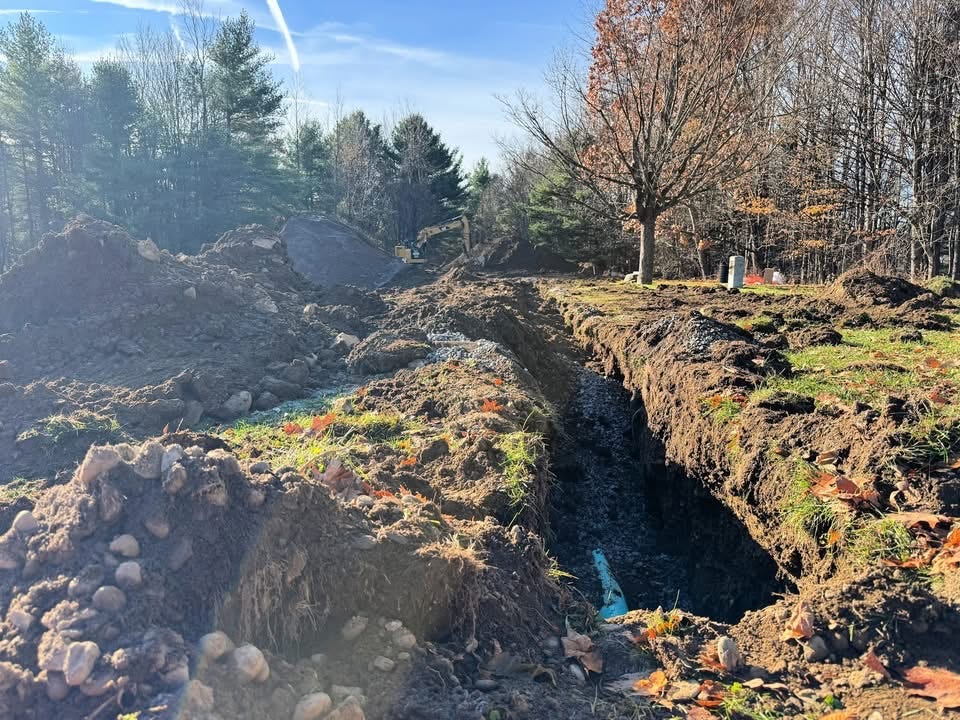
Septic work near the Visitor Center is underway—a humble but vital task. To reach the Wilkinson Trail, follow the tour road and take your first left. The tour road remains open until 4 PM, the Visitor Center until 5, and the grounds from sunrise to sunset.
Let us walk not just in memory, but in gratitude. For every smooth path and clear sign is the result of labor—often unseen, always essential. As Paine might remind us: “The duty of a true patriot is to protect his country from its forgetfulness.”
So ride forth, traveler. The road is tended, the trail awaits, and the spirit of 1777 endures—thanks to those who keep it standing.